Dental Care
Dental Care for Children: A Parent's Guide from the First Tooth Onwards
03 October 2026
Dentavya Editorial Team
3 min read

When to start brushing, how much toothpaste to use, when to see a paediatric dentist, how to prevent early childhood cavities, teething, thumb sucking and what to do if a tooth is knocked out.
Baby teeth matter. They help children chew and speak, hold space for adult teeth and set the pattern for lifelong dental habits. Tooth decay is the most common chronic disease of childhood in India and almost entirely preventable. Here is what parents need to know at each stage.
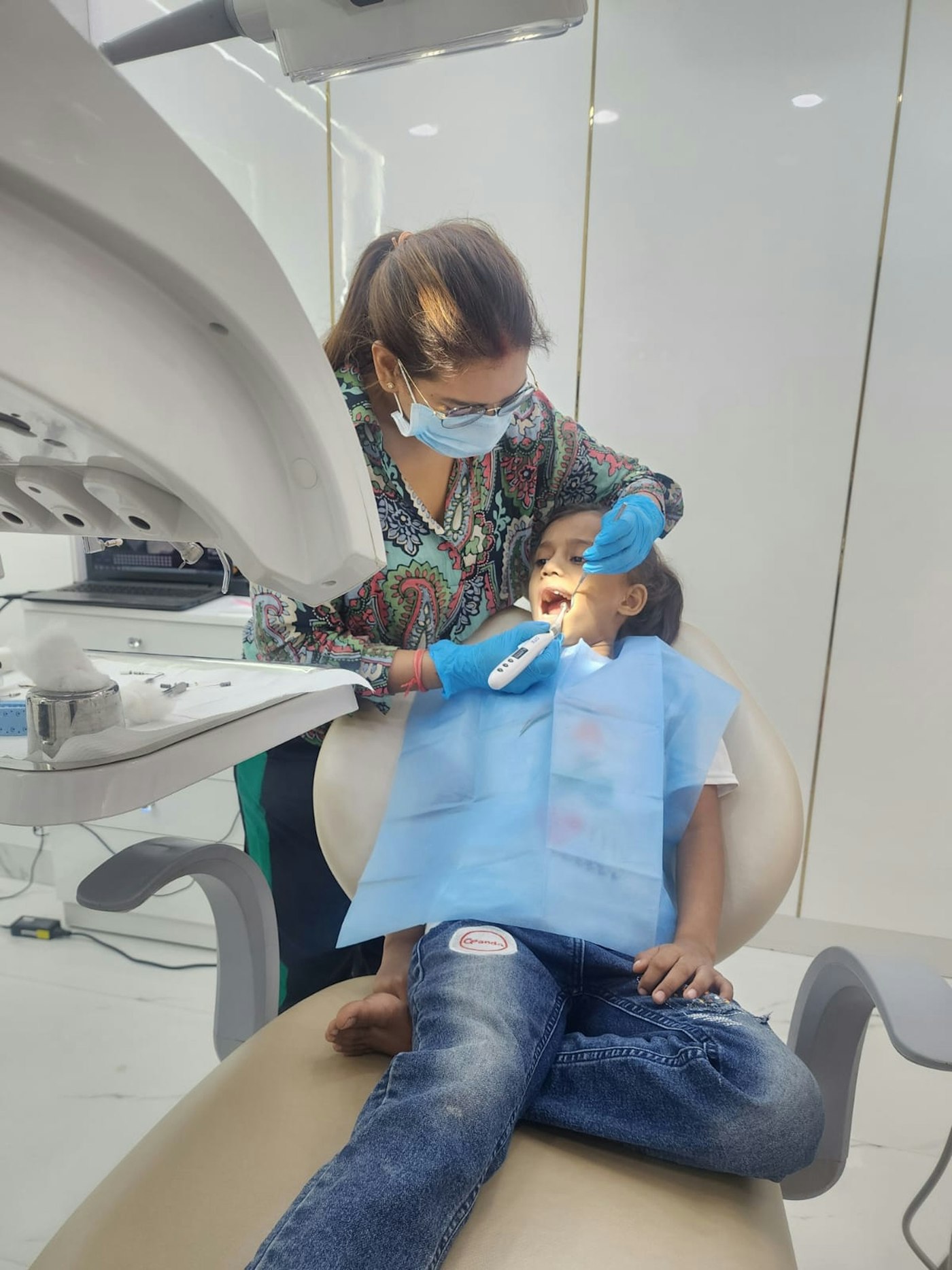 A first check-up by the first birthday lets the dentist watch development and coach parents.
Before the first tooth (0-6 months)
Wipe your baby's gums with a clean, damp cloth after feeds. Never put a baby to bed with a bottle of milk or juice; the sugars pool around the teeth and cause early childhood caries once teeth appear.
First teeth (6 months - 2 years)
- Start brushing as soon as the first tooth appears, twice a day, with a soft baby brush and a smear (rice-grain size) of fluoride toothpaste.
- Teething can cause drooling, chewing and mild irritability. A chilled teething ring or gentle gum massage helps; teething does not cause high fever or diarrhoea, so see a doctor if those occur.
- Move from bottle to cup by 12-18 months and avoid sweetened drinks.
- First dental visit by the first birthday, or within six months of the first tooth. It is mainly to check development and coach parents.
Toddlers and preschoolers (2-6 years)
- Use a pea-sized amount of fluoride toothpaste from age three and teach the child to spit, not swallow.
- Parents should brush or finish brushing until the child can tie shoelaces, around age seven or eight.
- Start flossing when two teeth touch.
- Limit sweets, biscuits and juice to mealtimes; water and milk between meals.
- Thumb sucking is normal until about four; if it continues past five, ask the dentist for gentle strategies, as it can push teeth forward.
- Ask about fluoride varnish applications every six months, which cut cavities significantly.
School age (6-12 years)
- The first permanent molars arrive around age six, behind the baby teeth, without any baby tooth falling out. They are easy to miss and quick to decay; fissure sealants painted onto their grooves protect them for years.
- Baby teeth loosen and fall out from about six; wobbly teeth can be left to come out naturally.
- An orthodontic assessment around age seven can catch bite problems early, when guidance is simplest.
- A mouthguard is essential for contact sports.
Teenagers
Snacking, fizzy drinks and less supervision make the teens a high-risk period for decay and gum inflammation. Braces or aligners are commonly started between 11 and 15. Keep up six-monthly visits, and talk openly about the effects of smoking and tobacco.
Preventing cavities in children: the essentials
- Fluoride toothpaste twice daily, supervised
- Sugar only at mealtimes; no sweet drinks in bottles or sippy cups
- Fluoride varnish and sealants at the dentist
- Check-ups every six months from the first birthday
Dental emergencies in children
- Knocked-out permanent tooth: hold it by the crown, rinse gently, put it back in the socket if you can or keep it in milk, and reach a dentist within 30-60 minutes. Baby teeth are not replanted.
- Chipped tooth: keep the fragment and see the dentist the same day.
- Toothache: clean the area, give paracetamol in the right dose and book an appointment; swelling of the face needs urgent care.
Making dental visits positive
Start early, keep your own anxiety out of it, use positive words, and choose a dentist who is good with children. Paediatric dentists (paedodontists) specialise in treating children, including anxious ones. Find a children's dentist near you on Dentavya.
This article is for general information and does not replace a consultation with a qualified dentist. Costs mentioned are indicative and vary by clinic, city and case.