Metal braces, ceramic braces or clear aligners? Compare cost in India, treatment time, appearance, comfort and which problems each can fix, so you can choose the right way to straighten your teeth.
Crooked or crowded teeth are easier to straighten than ever, and adults now make up a large share of orthodontic patients. The choice usually comes down to traditional braces or clear aligners. Both work; they suit different people, problems and budgets.
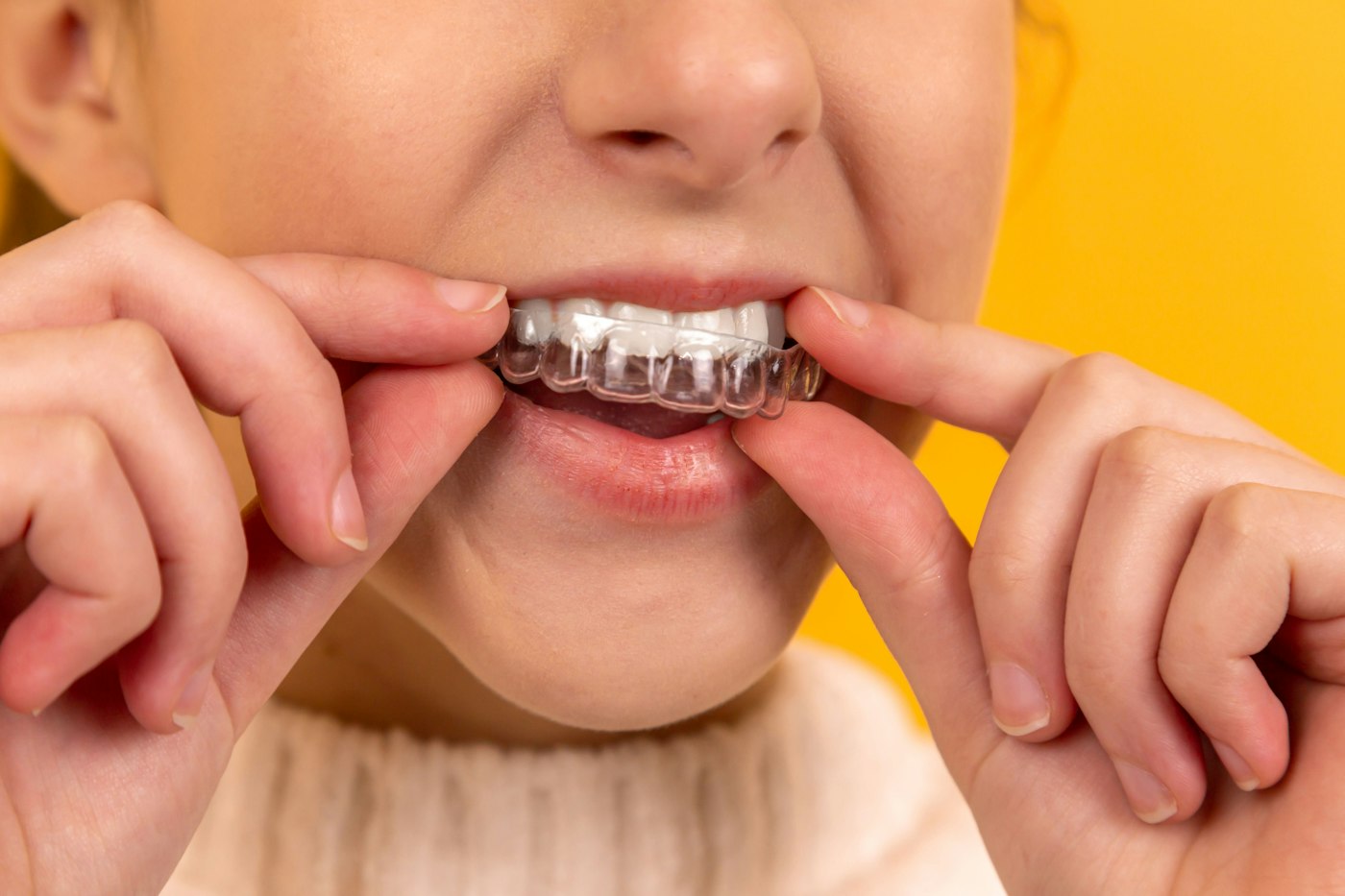 Clear aligners are removable trays, changed every one to two weeks, that straighten teeth almost invisibly.
How braces work
Brackets are bonded to each tooth and connected by a wire that the orthodontist adjusts every four to six weeks. The gentle, continuous pressure moves teeth into position. Options include:
- Metal braces: the most economical and the most effective for complex cases.
- Ceramic braces: tooth-coloured brackets that are less visible.
- Self-ligating braces: use clips instead of elastic ties, often with fewer visits.
- Lingual braces: fixed behind the teeth, completely hidden but costlier and harder to clean.
How clear aligners work
A series of transparent, removable trays is made from a 3D scan of your teeth. Each set is worn for one to two weeks, 20-22 hours a day, moving teeth a fraction of a millimetre at a time. Aligners are available from international brands and several good Indian brands at lower prices.
Comparison at a glance
| Metal braces | Ceramic braces | Clear aligners |
|---|
| Indicative cost in India | INR 25,000 - 60,000 | INR 40,000 - 90,000 | INR 60,000 - 2,50,000 |
| Visibility | Visible | Less visible | Nearly invisible |
| Treatment time | 12-24 months | 12-24 months | 6-18 months (mild to moderate cases) |
| Removable | No | No | Yes (for eating and brushing) |
| Suitable for complex cases | Yes | Yes | Mild to moderate; some complex cases with attachments |
| Comfort | Some irritation from brackets | Some irritation | Smooth; mild pressure with each new tray |
| Food restrictions | Avoid hard and sticky foods | Avoid hard and sticky foods | None (remove to eat) |
| Depends on patient discipline | Low | Low | High: must be worn 20+ hours daily |
Which is right for you?
Choose braces if: your case is complex (severe crowding, large gaps, bite correction, rotated teeth), you want the most economical option, or you are not confident about wearing trays consistently. Braces are the usual choice for children and teenagers.
Choose aligners if: your problem is mild to moderate, you want a discreet option for work or social reasons, you want to eat and brush without restrictions, and you can commit to wearing them as instructed.
What happens after treatment
Whichever you choose, you will need retainers afterwards, usually a thin fixed wire behind the front teeth or removable clear retainers worn at night. Without retainers, teeth slowly drift back.
Frequently asked questions
Am I too old for braces?
No. Healthy teeth and gums can be moved at any age; many patients start orthodontic treatment in their 30s, 40s and beyond.
Do braces or aligners hurt?
Both cause mild soreness for a few days after an adjustment or a new tray. It settles quickly and ordinary painkillers help.
How often will I visit the clinic?
Braces need an adjustment every four to six weeks. Aligner patients are typically seen every six to ten weeks to collect the next sets.
An orthodontist can scan your teeth and show you a simulation of the expected result. Find orthodontists near you on Dentavya.